


SEACURE Markets - Activity Sectors
SEACURE’s markets: coastlines, ports, maritime structures and renewable energy, ecological restoration. For each of these activity sectors, SEACURE offers tailored and customized solutions.
Discover our solutions
Biodiversity
Ecological restoration: a key challenge
The phenomena of erosion and coastline retreat are accompanied by the weakening of marine ecosystems in coastal and port areas, threatening certain species with extinction.
According to the French Biodiversity Office, in metropolitan France, 94% of marine and coastal habitats are in poor condition, including Posidonia seagrass beds and estuaries. Over 56% of coastal surface water ecosystems are damaged.
Yet, marine ecosystems provide vital services: heat absorption, CO2 storage, oxygen production, food resources, etc.
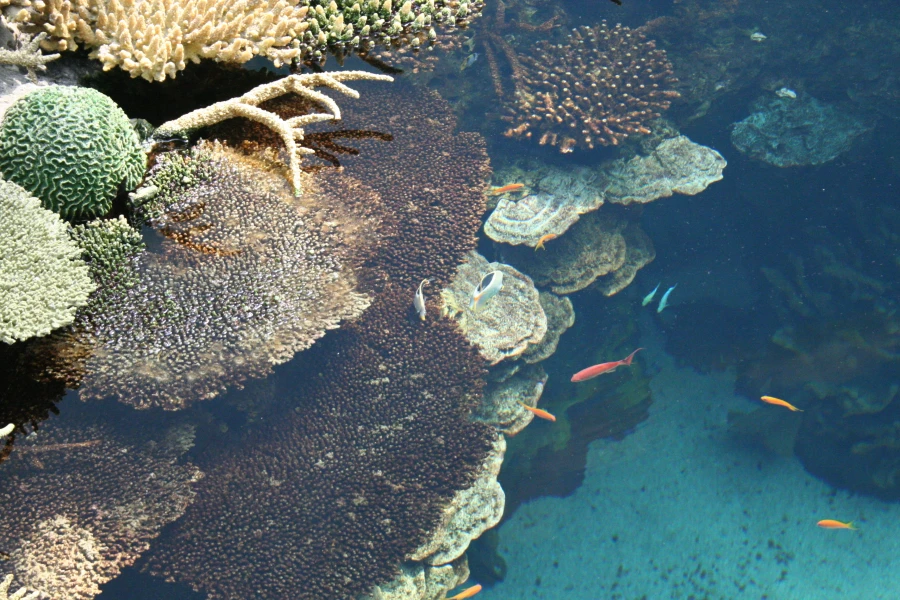
Ecological restoration in marine environments involves rehabilitating degraded underwater habitats to restore their natural functions, resilience, and capacity to provide ecosystem services. The installation of artificial reefs in port areas is part of this strategy.
Weaknesses of traditional solutions
Traditional reefs, often made of concrete blocks or submerged rocks, have limitations in terms of attractiveness to marine fauna and flora, offering only limited ecological benefits.
Bare concrete structures, being too smooth and not structurally complex, are not conducive to the settlement of certain species essential for developing biodiversity hotspots. They offer little structural complexity and host fewer species than “living” or bio-inspired reefs, limiting their role in marine biodiversity regeneration.
SEACURE solution: GeoReef®
SEACURE designs, develops, and installs custom artificial reefs, adapted to each site and configuration.
Based on a core steel structure, which can take various forms according to requirements, SEACURE reefs are designed to optimize colonizable surface area through structural complexity that increases shelter volume for post-larvae and juveniles, protecting them from predators.
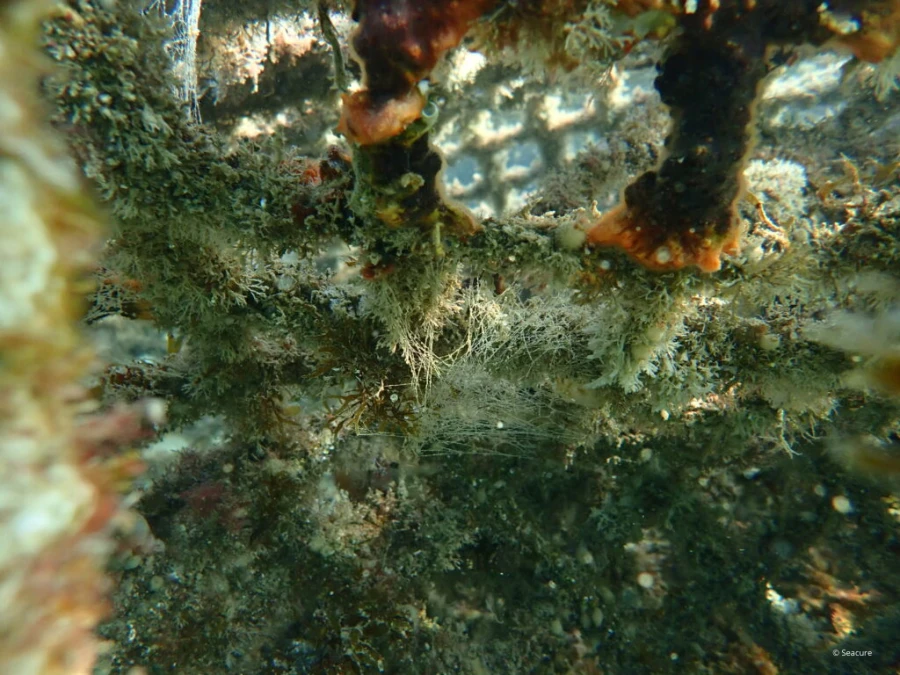
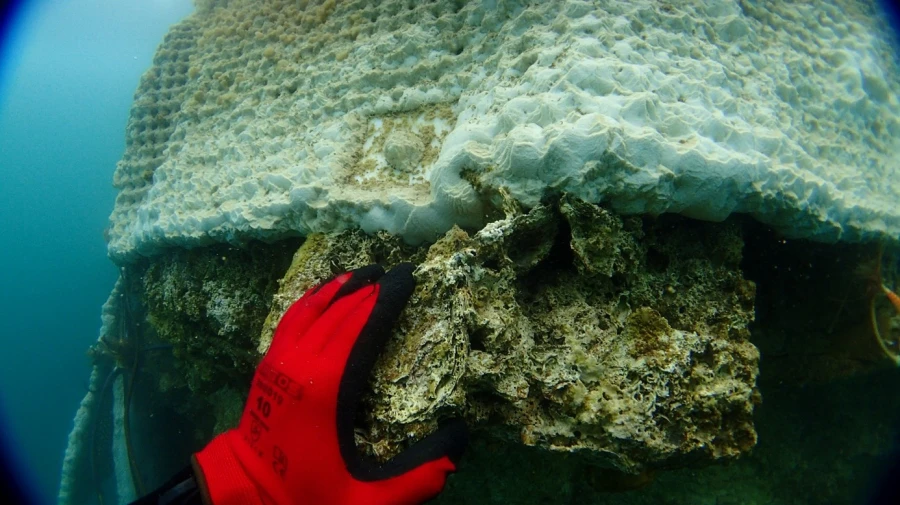
These reefs are also coated with GEOCORAIL®, which protects the structure from corrosion, ensuring durability. Thanks to its biomimetic appearance and calcomagnesian composition, GEOCORAIL® promotes algal colonization and settlement by sessile organisms such as sponges, ascidians, bryozoans, as well as by mobile (benthic) organisms.
Contact usOur solutions
GeoReef®
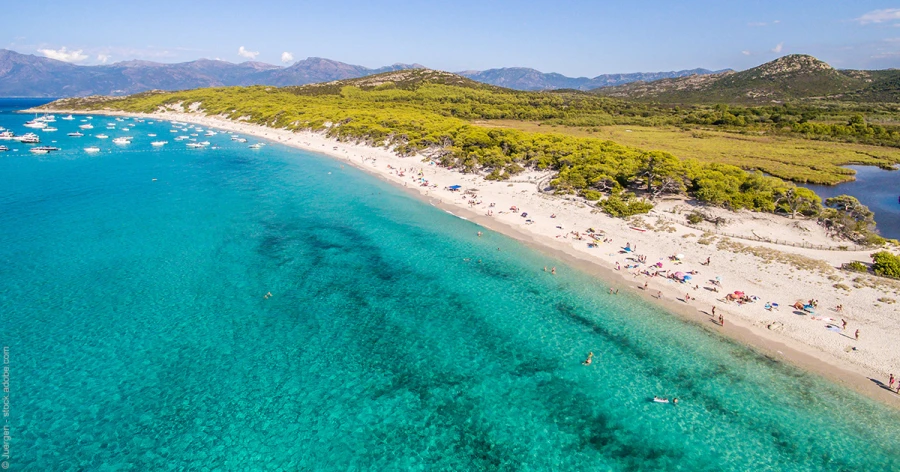
GeoReefs® serve to support the local repopulation of fauna and flora. This solution...
Coastlines
The relentless retreat of the coastline: a key issue
The retreat of the coastline is now a global issue, which is intensifying and even accelerating year after year due to climate change and human activities.
In metropolitan France, according to CEREMA figures, 1,720 km of coastline (out of a total of 5,500 km) are retreating, representing a quarter of the coastal line. Approximately 30 km² of land has disappeared over the past 50 years due to the combined effects of "natural" erosion, human activities, and climate change.
In Overseas Territories, the figures are even more alarming, threatening the very way of life of entire communities, whose lands are directly at risk of disappearing due to coastal erosion and coastline retreat.
This phenomenon is found throughout Europe and the world, resulting in economic, social, and demographic consequences.
Weaknesses of traditional solutions
In response to this challenge, traditional coastal engineering structures (dikes, rock armour, breakwaters) are no longer suitable and are increasingly costly to maintain.
While they provide immediate protection against erosion and marine submersions, these rigid structures alter the natural dynamics of the coastline and often shift the problem to other unprotected areas. By preventing the natural circulation of sediments, they sometimes worsen downstream erosion and lead to long-term artificialization of coastal landscapes.
Furthermore, their costly maintenance and lack of adaptability to rising sea levels reduce their long-term effectiveness. As a result, these purely defensive approaches are increasingly inadequate compared to more sustainable and ecological solutions.
Towards alternative solutions
Alternative solutions, known as Nature-Based Solutions (NBS), better address the challenges of coastal protection and ecosystem restoration while being gentler and less expensive.
These solutions follow a logic of circular economy and regenerative coastal engineering, addressing current challenges in preserving and adapting affected territories.
SEACURE operates within this framework, with its GeoWave®, GeoShore®, and GeoSwell® solutions, offering an ecological and cost-effective alternative to traditional dikes and groins made of rock armour or concrete.
Contact usOur solutions
GeoWave®
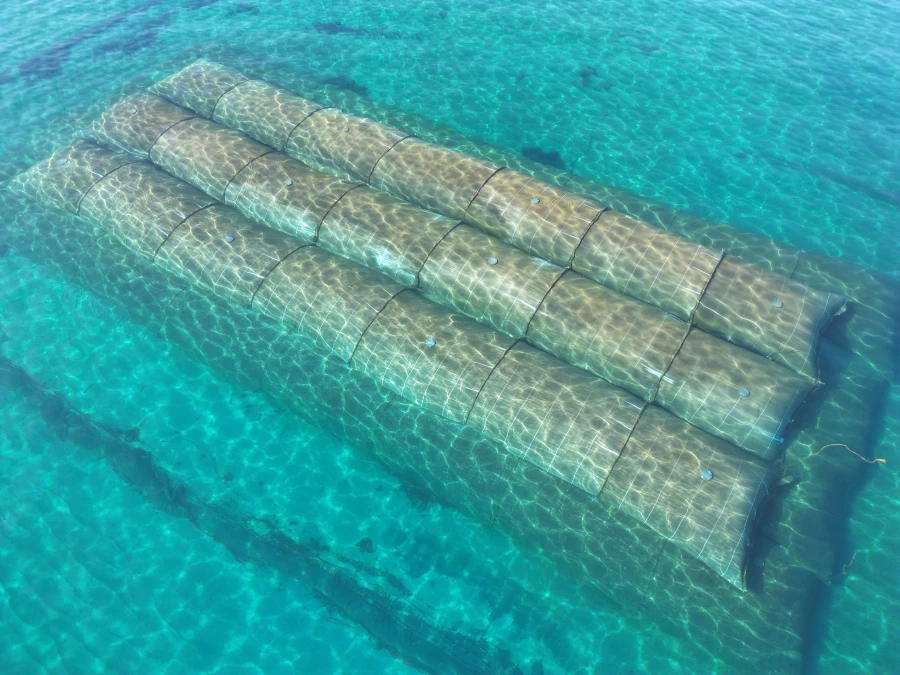
GeoWaves® are large textile containers filled with sand and installed offshore, in shallow areas...
GeoShore®
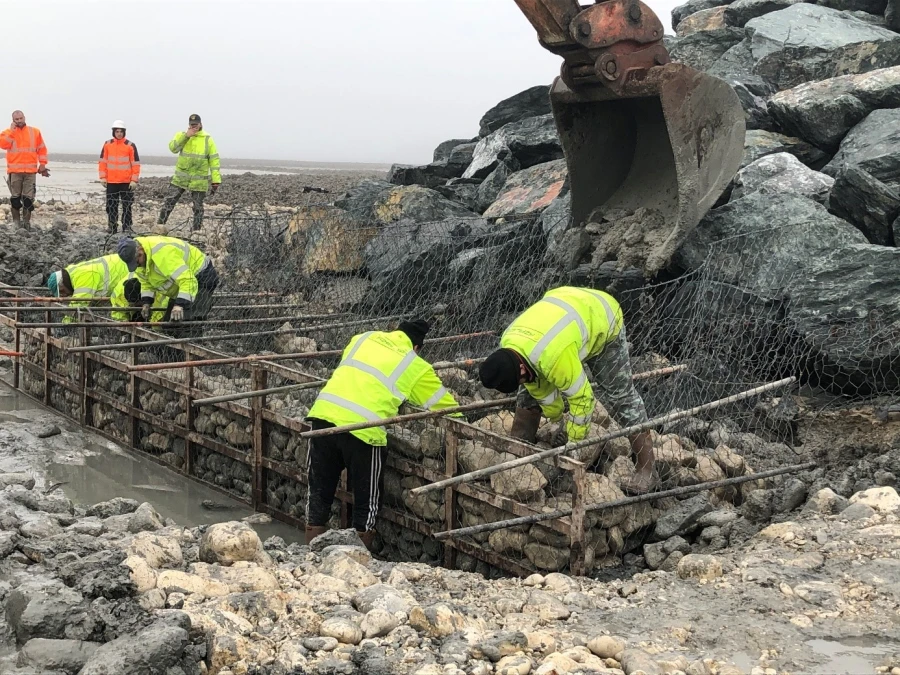
GeoShore® is an innovative bank reinforcement solution using the GEOCORAIL® process, ideal for fighting fluvial...
GeoSwell®
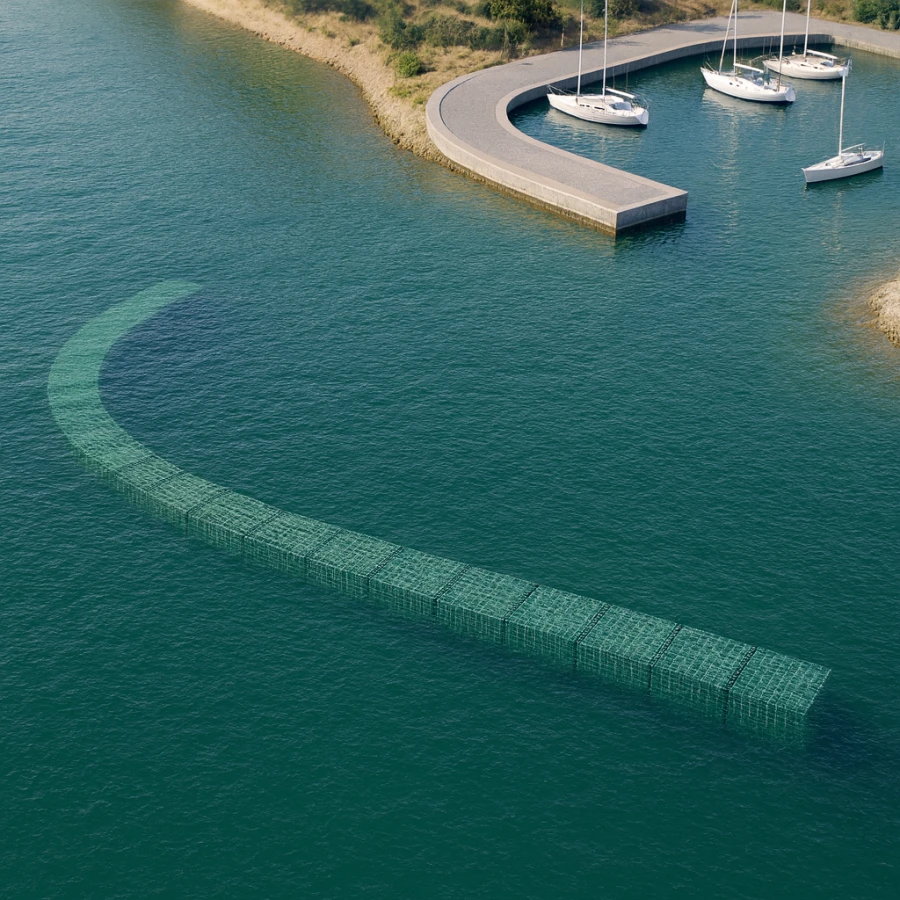
GeoSwell® an innovative submerged breakwater solution to protect coastlines from erosion. Gabion structure with......

Ports
Challenges
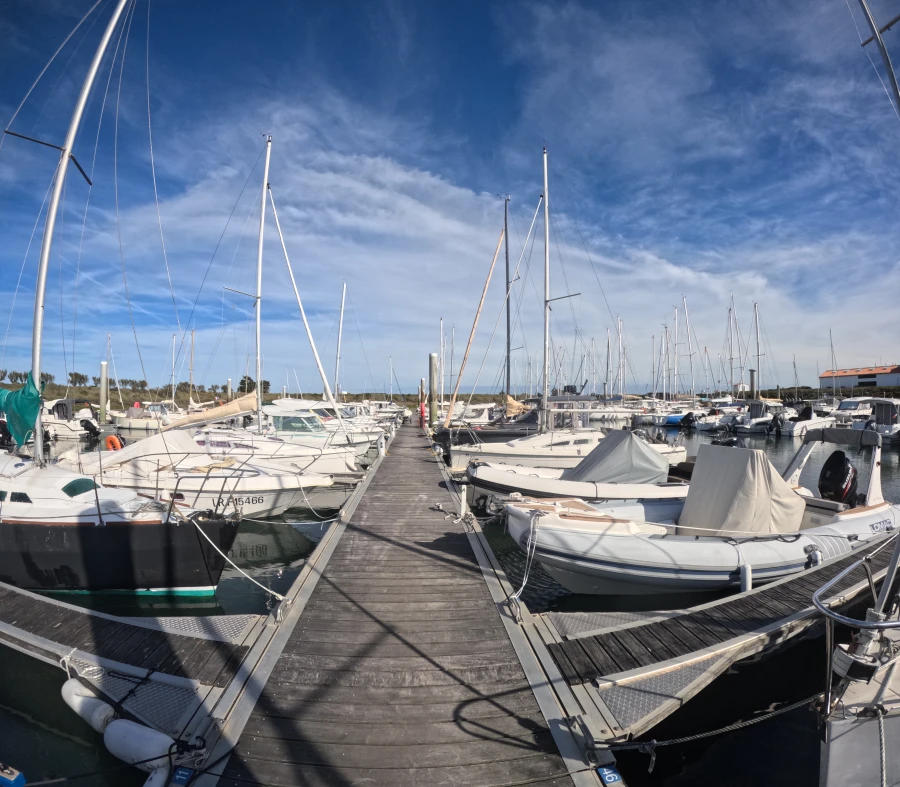
The phenomenon of scour is a major issue for the protection of port and coastal infrastructures. It involves localized erosion of seabeds or sediments around the base of port structures such as dikes, quays, jetties, and pontoons due to currents, waves, or repeated vessel passage.
This scour weakens the foundations of structures by reducing their stability and can, over time, cause deformations, settlements, or even partial collapses.
In port areas, this phenomenon is intensified by water movements generated by maritime traffic and by changes in sediment dynamics caused by the presence of the structures themselves.
Limits of traditional solutions
Traditional solutions used to combat scour in ports, such as concrete protections or stabilizing rock armour, now show significant limitations.
Indeed, while they can temporarily stabilize the seabed and protect structures against erosion, these rigid systems do not always address the complexity of hydro-sedimentary dynamics in port environments.
Their rigidity also makes it difficult for them to adapt to the natural morphological changes of the port.
Furthermore, the installation and maintenance of such structures carry significant economic and environmental costs.
Towards more sustainable alternative solutions
In this context, port clients are increasingly turning to alternative solutions that are more sustainable and flexible, involving innovative structures capable of dissipating current energy while preserving the natural balance of the environment.
More adaptable and environmentally friendly, these solutions are now developed as a complement or replacement for traditional structures. Anti-scour geotextile mats, one of the products developed by SEACURE, are part of these alternative solutions.
Contact usOur solutions
 pour le port des Oursinières--900.webp)
GeoSeabed®
GeoWaves® are large textile containers filled with sand and installed offshore, in shallow areas...
GeoFlow®
GeoFlow® is designed to protect submerged metal structures in marine environments through advanced technologies...
GeoDock®
Masonry quays are primarily historic port structures made of stones and facings, requiring specialized protection and...
GeoReef®
GeoReefs® serve to support the local repopulation of fauna and flora. This solution...
Renewable energy
Challenges
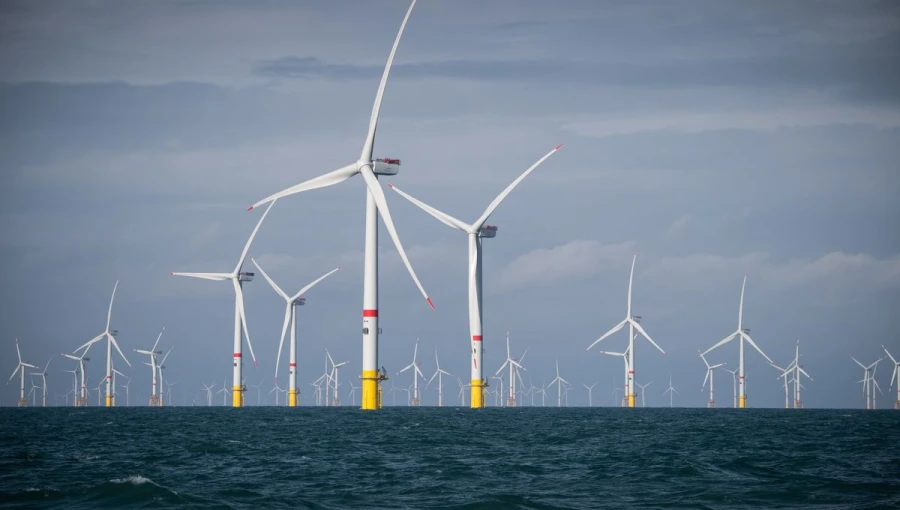
In fixed offshore wind farms (non-floating), the wind turbine towers are anchored into the marine substrate. Subjected to strong hydrodynamic forces, these towers experience significant scour at their base, which can ultimately impact the stability and integrity of the structure, weakening the entire installation.
This scour phenomenon can be intensified by currents, seabed composition, as well as the size and shape of the underwater structure.
Current solutions
Currently, few solutions exist to manage this scour issue at the base of the structure. Several solutions are under development at various stages of maturity, some still in the experimental phase.
Traditional solutions based on rock armour (placement of rocks around the tower base to stabilize the substrate) and articulated concrete mats are costly and have a significant ecological impact. Solutions using geotextile mats or sandbags are more flexible but also more fragile.
SEACURE solution: Anti-scour mats covered with GEOCORAIL®
In this context, SEACURE proposes using its GeoSeabed® solution by placing sand-filled geotextile mats around the base of the structure, where the wind turbine tower penetrates the substrate.
By polarizing these mats, the geotextile surface is coated with a layer of GEOCORAIL® which protects the structure from external aggressions, reinforces it, and promotes the regeneration of marine biodiversity, effectively transforming the base of the wind turbine tower into an artificial reef.
Contact usOur solutions
GeoReef®
GeoReefs® serve to support the local repopulation of fauna and flora. This solution...
GeoSeabed®
GeoWaves® are large textile containers filled with sand and installed offshore, in shallow areas...
Floating Solar
Key challenges
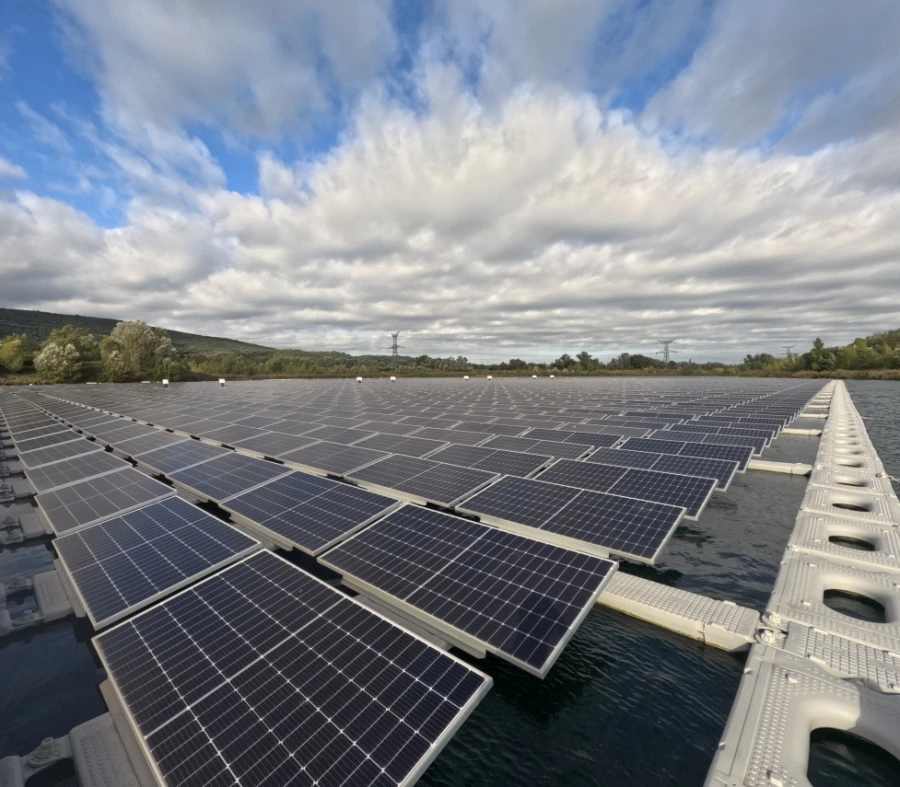
Floating photovoltaic systems make it possible to harness artificial bodies of water, basins, reservoirs and industrial sites without consuming additional land. However, these installations face specific constraints: fluctuating water levels, wind, waves, currents, adverse weather conditions, varying seabed conditions and mechanical loads on the floating structure.
In this context, the anchoring system plays a critical role. It must keep the platform in position, absorb mechanical forces and ensure the stability of the installation throughout its operational life. On large-scale projects such as O'MEGA in the Vaucluse (84), Akuo reports that the O'MEGA1 bis extension added a 5 MW block, bringing the total site capacity to 22 MWp. The floating solar market is also expanding into hybrid sites, such as EDF's Lazer power plant, installed on a hydroelectric dam reservoir, where anchoring and flotation systems must adapt to water level variations.
The limits of conventional approaches
Anchoring a floating photovoltaic platform cannot be treated as a straightforward installation task. Every site has its own set of constraints: bathymetry, depth, soil composition, wind exposure, hydraulic variations, accessibility, expected operational lifespan and maintenance requirements.
Poor sizing can lead to platform displacement, premature fatigue of mooring lines, excessive stress on the structure or costly corrective interventions. This is a point strongly emphasised by specialist players in the sector: Ciel & Terre highlights anchoring and mooring as key factors in the longevity of a floating solar plant, requiring a thorough understanding of environmental loads and site conditions.
The Seacure approach
Seacure supports floating photovoltaic platform projects across all anchoring elements: feasibility studies, sizing, design, supply, installation, inspection and maintenance.
Drawing on its engineering expertise and operational experience in aquatic environments, Seacure designs anchoring systems tailored to the actual constraints of each site. The goal is to ensure platform stability, including in adverse weather conditions, while delivering a reliable, controllable and long-lasting installation.
Seacure also carries out field operations: anchor installation, diving interventions, mooring line and deadweight inspections, maintenance works and GPS surveys. This dual technical and operational expertise enables Seacure to offer a comprehensive solution, from initial study through to ongoing operational monitoring.
Contact us